In Vedic astrology, a person’s Lagna (Ascendant) and Rashi (Moon Sign) shape how the 18 years of Rahu Mahadasha actually play out for an individual. Rahu is a shadow planet, a chhaya graha, and its dasha rarely behaves in a straight line. It builds mental fog, disturbs decision-making, and pushes the native toward sudden gains or sudden losses without much warning. Yet Vedic tradition also offers a set of grounded, repeatable remedies that steady the mind and soften the harsher effects of this long planetary period.
This article looks at what classical practice and modern astrological counselling recommend for this phase, where it applies regardless of house placement, and where extra caution is required based on the birth chart.
Rahu Mahadasha and the Lagna-Rashi Blueprint
Rahu can sit anywhere from the Pratham Bhav (First House) through to the Dwadash Bhav (Twelfth House), and its dasha effects touch every chart differently depending on that placement, along with the strength of the Lagna and the Rashi. A weak or afflicted Lagna generally means the native feels the confusion of Rahu more sharply, while a well-supported Rashi lord can soften the swings.
Regardless of which bhava (house) Rahu occupies, certain worship practices and lifestyle disciplines apply universally during Rahu Mahadasha. This is one of the more reassuring points that many quick-read guides tend to skip: the native does not need a highly specific chart reading to begin the basic remedial work; the foundational practices remain the same across placements, and only the finer gemstone guidance changes according to house and sign.
The Good News First: What Steady Worship Brings
Consistency, more than any single ritual, is what determines outcomes in this eighteen-year period. When the worship routine described in classical practice is followed without long breaks, pending work tends to move again, career growth resumes, and business matters that were stuck begin to clear. Support systems, friends, well-wishers, and professional networks, tend to hold steady instead of drifting away, which is one of the more common complaints during a difficult Rahu Mahadasha.
Growth connected to the Labh Sthan (Eleventh House of gains) often becomes visible once the mind stabilises, since much of Rahu’s disruption is psychological rather than purely circumstantial. Clarity of thought, described in tradition as freedom from illusion or bhram, is repeatedly named as the first sign that the remedies are working.
Steadies the mind through this long planetary phase
Shivling abhishek with raw milk and one pinch of black til (sesame)
43 days, starting Shukla Paksha Monday
Removes confusion, sharpens vision
Hanuman Chalisa recitation, sweet paan and jasmine oil diya (four-wick)
Tuesday and Saturday nights
Strengthens the support system
Chanting “Om Sitaram Cha Hanumate Namah” or “Jai Shri Ram”
Daytime hours only
Continuous positivity through the day
The 43-day abhishek cycle deserves particular attention, since it is one of the more structured remedies in this tradition. It begins on a Monday falling in Shukla Paksha (the waxing lunar fortnight) and continues daily for 43 days, followed by a 15-day pause, after which the cycle restarts on the next Shukla Paksha Monday. This pattern is meant to be repeated for as long as Rahu Mahadasha continues, whether the native is at the start, the middle, or the closing years of the dasha.
Hanuman worship carries its own logic worth noting. Daytime hours are reserved for Ram bhakti, since Hanuman is considered absorbed in devotion to his ishta dev, Bhagwan Ram, during daylight. Evening and night worship, done after sunset, is therefore considered the appropriate time to seek Hanuman’s direct support, since he is regarded as the eleventh Rudra avatar of Bhagwan Shiv.
Lifestyle Discipline During This Dasha
Diet and habits carry real weight in this period, and this is a point competitors often gloss over. Non-vegetarian food and alcohol, including whisky, beer, and vodka, are best avoided entirely through Rahu Mahadasha. Social pressure from friends or colleagues to relax this discipline is common, but tradition holds that staying anchored to dharma and a positive mindset matters more during this dasha than at almost any other time in the chart.
Household discipline also plays a supporting role. A clean, tidy bedroom each morning, and prompt repair of any leaking tap or bathroom leakage, are treated as more than housekeeping matters. In classical thought, Rahu is sensitive to disorder in the living or working space, and unresolved leakage during this dasha is associated with drawn-out financial strain.
Additional Supporting Remedies
Saffron (kesar) tilak applied to the forehead each morning, along with a small amount consumed before leaving home
Five turmeric (haldi) bundles tied in yellow cloth, kept in a bag, vehicle, home temple, or office drawer
A yellow handkerchief carried regularly, along with a white cap worn when travelling through a difficult phase
Seventeen water coconuts, each fitted with a purified Rahu yantra, rotated seventeen times anticlockwise from the forehead and released into flowing water over seventeen consecutive weeks (a temple offering is the alternative where flowing water is not accessible)
Why Consistency Fades and Why It Matters
A common pattern in remedial astrology is enthusiasm that lasts two weeks and then quietly stops. Two visits to the temple, two days of chanting, and then the routine drops away. This is treated in tradition as Rahu’s own influence at work, since Rahu is described as the planet of illusion and disruption, and a mind under its dasha resists the very discipline that would ease its pressure. Recognising this pattern in advance helps in sticking with the routine past the point where motivation naturally weakens. None of the remedies listed here demand rare ingredients or elaborate ceremony; the difficulty lies purely in continuing them without long gaps.
Cautions: Gemstones and the Sudden Nature of Rahu
Rahu’s results, whether favourable or difficult, tend to arrive suddenly rather than gradually. Financial loss from a bad investment, a cheated property deal, or a stock market setback can appear without warning, which is why many natives turn to financial astrology guidance before making major money decisions during this dasha. Sudden gains, unexpected respect, or a widened social circle can also appear without warning. This unpredictability is precisely why gemstone therapy needs care rather than guesswork during Rahu Mahadasha.
Gomed (Hessonite), the stone traditionally linked to Rahu, is not advised when Rahu sits in a debilitated sign, in the Ashtam Bhav (Eighth House), the Dwadash Bhav (Twelfth House), or the Lagna itself. Many natives wear Gomed reflexively once they learn they are running this dasha, without checking these placements first, which can work against the intended benefit. Yellow Sapphire (Pukhraj) is more commonly recommended across Lagnas, though even here, signs such as Vrishabha (Taurus), Tula (Libra), and Kanya (Virgo) as ascendants call for a proper consultation with an astrologer before wearing it, since Guru’s placement and rulership need checking against the individual chart.
Career, Relationships and Mental Pressure
The eighteen years of Rahu Mahadasha span roughly two decades, and when this period begins early in a career, complications around direction and confidence are frequently observed. Relationship strain, financial instability, unstable employment, and heightened mental pressure are recurring patterns noted across many charts running this dasha, and a noticeable rise in stress or low mood has been observed in a considerable number of cases during this planetary period.
Shani (Saturn), Mangal (Mars), and Guru (Jupiter) placements in the chart often modify how sharply these pressures land, and a competent reading of the Saptam Bhav (Seventh House) for relationship matters, along with the Dasham Bhav (Tenth House) for career, adds useful context beyond the general remedies listed here. Where problems persist for six months to a year despite consistent worship, tradition points toward Kali Mata upasana as a stronger measure: Wednesday and Saturday night offerings of moti boondi laddoo, along with regular recitation of the Kali Chalisa seated before her image or idol.
Conclusion: A Realistic Timeline
Results from these remedies are not instantaneous, and that is worth stating plainly rather than promising quick change. Practised without long breaks, most of these rituals begin showing visible benefit within 60 to 90 days. Mental steadiness tends to arrive first, followed by gradual movement in stalled work, career matters, and business decisions.
Rahu Mahadasha is, by classical reputation, one of the more testing eighteen-year periods a chart can carry, yet the remedies attached to it are neither expensive nor complicated. What they require most is discipline: a clean living space, dietary restraint, and worship that continues past the point where motivation naturally fades. That consistency, sustained through this long dasha rather than attempted in short bursts, is what classical astrology repeatedly identifies as the real turning point.
Premium Astrology Services
Need Expert Vedic Astrology Guidance?
Get detailed horoscope analysis, kundli insights, and personalised remedies to understand your life path and make confident decisions with clarity.
Have questions about your horoscope or consultation? Our team is available to assist you with bookings, queries, and guidance for all astrology services.
Every consultation is carefully analysed using authentic Vedic astrology principles by AMMIT KAPUR, ensuring clarity, depth, and reliable astrological guidance.
Leave a Comment
Explore Our Other Astrology Insights Too
Your journey with the stars doesn't end here.
Every transit tells a different story. Explore more blogs on zodiac predictions, remedies, and planetary
movements to understand your cosmic journey better.
Gain clarity about your life, relationships, career, finances, and future opportunities through
detailed astrology by date of birth with expert guidance from AMMIT KAPUR.
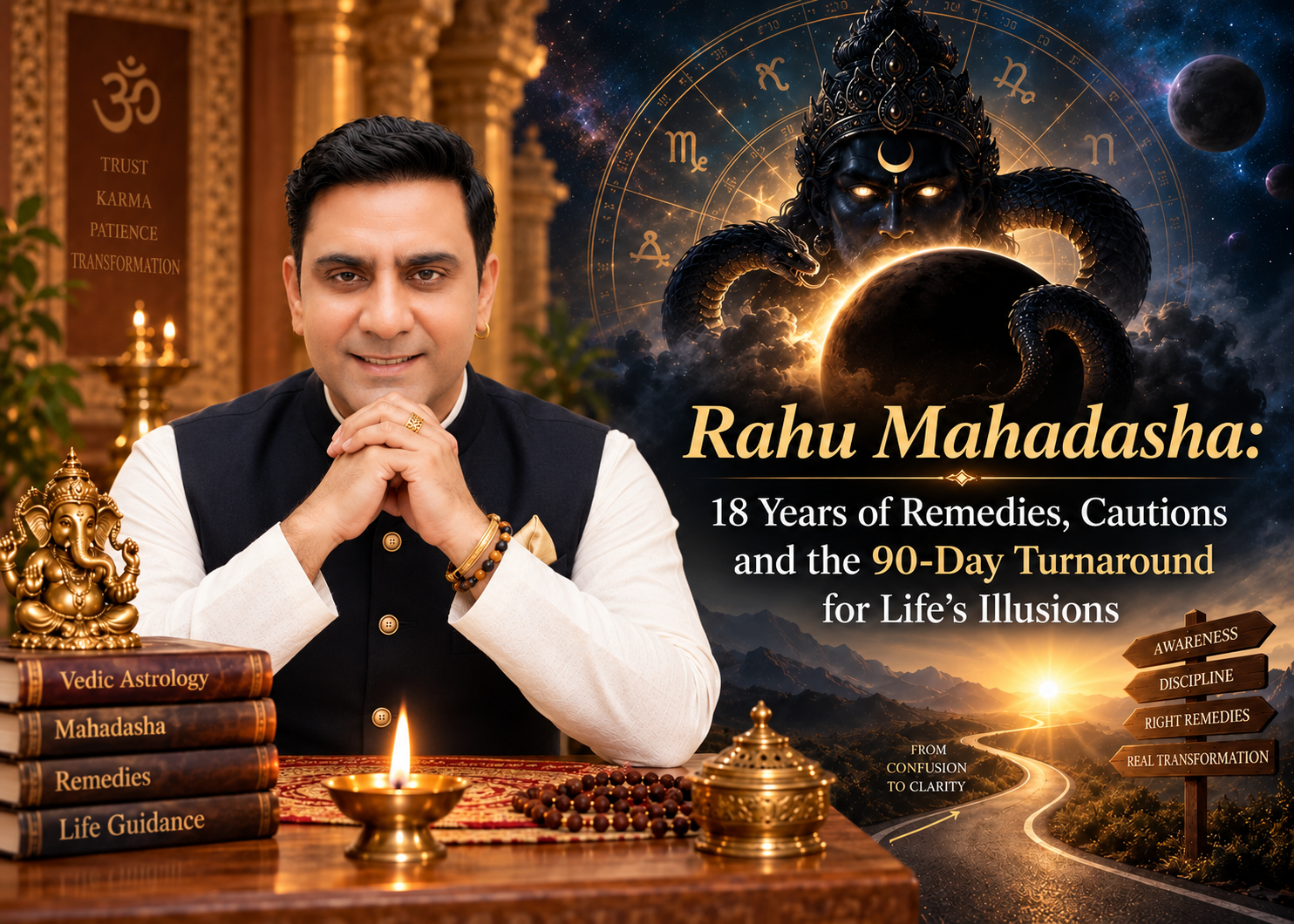

 Table of Contents
 Key takeaways










Leave a Comment