What is Raksha Bandhan?
Raksha Bandhan celebrates the bond between a brother and sister, where a sister ties a Rakhi on her brother’s wrist, and he promises to protect and support her in return. The date isn’t fixed on the solar calendar; it follows Purnima (the full moon), so both the date and the auspicious window to tie Rakhi change every year.
If you’re wondering when is Raksha Bandhan 2026? This guide has everything you need, the exact date, Shubh Muhurat, Bhadra timing, Puja Vidhi, the day’s astrological significance, and zodiac-wise Rakhi suggestions from Astrologer Ammit Kapur.
Raksha Bandhan 2026 Date
Raksha bandhan 2026 will be celebrated on Friday, August 28th, 2026, on Shravana Purnima, the full moon day of the Shravan month. If you’re checking the 2026 Raksha Bandhan date for travel or gifting plans, this is the one to note down.
|
Detail
|
Timing
|
|
Date
|
Friday, August 28th, 2026
|
|
Tithi
|
Shravana Purnima
|
|
Purnima Tithi begins
|
9:08 AM, Thursday, August 27, 2026
|
|
Purnima Tithi ends
|
9:48 AM, Friday, August 28th, 2026
|
Why is it the 28th and not the 27th?
Purnima actually covers most of the daylight hours on August 27th as well, so this question comes up every year. The answer comes down to Udaya Tithi, the Hindu calendar rule that a festival is observed on the day when its Tithi is present at sunrise, not on whichever day the Tithi covers more hours.
On August 28th, Purnima is still active at sunrise (it doesn’t end until 9:48 AM), so August 28th is the correct day by this rule, even though August 27 technically has more Purnima hours in it. This is also why some sources list Rakhi dates a day apart; they’re following different regional conventions on the same underlying Panchang.
Raksha Bandhan 2026 Shubh Muhurat
|
Muhurat
|
Timing
|
|
Rakhi-tying window
|
5:57 AM to 9:48 AM, August 28th
|
|
Duration
|
Approx. 3 hours 51 minutes
|
|
Bhadra Kaal
|
Ends before sunrise, no overlap this year
|
|
Aparahna (afternoon, if morning is missed)
|
Approx. 1:30 PM – 4:00 PM
|
|
Pradosh Kaal (evening, last resort)
|
Approx. 6:30 PM – 8:00 PM
|
A quick note on the technical side: classical Panchang texts actually name Aparahna (afternoon) as the most preferred window for Raksha Bandhan 2026 specifically, with the morning treated as a practical alternative. In most years, families tie Rakhi in the morning simply because Bhadra Kaal often falls in the afternoon and has to be avoided. In 2026, Bhadra ends before sunrise, so the entire morning window is genuinely clear, which is why it’s being recommended as the primary window this year. If you’d rather follow the afternoon Aparahna period instead, that’s equally valid and, by classical reckoning, the more traditional choice.
Muhurat timings can shift by 10–25 minutes depending on your city, since sunrise and Tithi transitions vary by location. Cross-check against your local Panchang if you want a precise, city-specific window.
Bhadra Timing on Rakshabandhan 2026
Bhadra (also called Vishti Karana) is a period within the Panchang considered inauspicious for starting any new or ceremonial work, including tying Rakhi. It typically falls during part of the Purnima Tithi, which is why checking Bhadra timing is a yearly ritual for most families before they begin.
For Rakshabandhan 2026, Bhadra Kaal ends before sunrise on August 28thth. That means there’s no overlap between Bhadra and the daytime celebration at all, the entire recommended morning Muhurat (5:57 AM to 9:48 AM) is clear, without the usual scramble to time the ceremony around it.
If you’re tying Rakhi in the afternoon instead, it’s still worth checking your local Rahu Kalam timing for August 28th and avoiding that window, separately from Bhadra.
Significance of Raksha Bandhan 2026 in Hindu Astrology
Raksha Bandhan falls on Purnima, which is the day the Moon is at its fullest strength. In Vedic astrology, the Moon governs the mind, emotions, and family bonds, so a sibling celebration built around Purnima aligns directly with what the Moon represents. Tying Rakhi on this day is believed to activate protective energy between siblings and support emotional bonding within the family.
The festival’s origin is tied to several legends. The best known being Krishna and Draupadi, and Yama and his sister Yamuna, both centered on protection repaid through devotion. Shravana Purnima also holds significance for Upakarma, a Vedic thread-renewal ceremony observed by some Brahmin communities, reinforcing the day’s broader theme of renewal in relationships and protective bonds.
Why Rakhi Purnima Date, Time & Muhurat Matter According to Vedic Astrology
Vedic astrology places real weight on timing, not just intention. The Raksha Bandhan Muhurat is believed to carry planetary energy more supportive of the ritual than the same act performed outside that window. Since the festival is built around the Moon’s full strength on Purnima, aligning the ceremony with a stable, Bhadra-free window is thought to support family harmony and emotional stability more effectively, which is also why Bhadra itself is treated as actively working against the intention behind the ritual, rather than simply a neutral stretch of time.
This same principle applies across Vedic astrology more broadly from Vivah Muhurat for weddings to Griha Pravesh timing for moving into a new home. An action performed at the right planetary moment is believed to carry stronger, longer-lasting results than the same action performed at a random hour.
Raksha Bandhan 2026 Puja Vidhi
Items Required for Raksha Bandhan Puja
Keep the Puja Thali ready the night before so the morning isn’t rushed:
- Rakhi (thread)
- Kumkum
- Akshat (unbroken rice grains)
- Diya (lamp)
- Sweets
- Coconut
- Incense sticks
- Fresh flowers
Kumkum represents the first blessing of the day. Akshat symbolises abundance and helps the Tilak hold, broken rice grains are traditionally avoided. The Diya represents light and positive energy during the Aarti, and the coconut symbolises purity and completeness.
Step-by-Step Ritual
- Bath and fresh clothes – begin the day with a bath and wear clean, preferably new, clothes.
- Prepare the Puja Thali – arrange Rakhi, Kumkum, Akshat, a lit Diya, and sweets on the thali.
- Brother faces east – have your brother sit facing the east direction, considered auspicious for the ritual.
- Tilak – the sister applies Tilak with Kumkum and Akshat on her brother’s forehead first, as the opening blessing of the ceremony.
- Tie the Rakhi – the Rakhi is tied on the right wrist. While tying it, the traditional mantra recited is: “Yena baddho balirajaa daanavendro mahaabalaha, tena tvaam pratibadhnaami rakshe maa chala maa chala”, a prayer invoking the same protection once given to King Bali, asking that the bond stay unbroken.
- Aarti – the sister performs a small Aarti in front of her brother with the lit Diya.
- Exchange – she offers him a sweet; he offers a gift or Shagun in return.
- The promise – the brother renews his commitment to protect and support his sister.
If there’s more than one brother in the family, the sister ties Rakhi to each one individually rather than performing the ceremony once for the group.
Astrological Tips for Raksha bandhan 2026
A few practices suggested by Astrologer Ammit Kapur to add to the standard ritual:
- Chanting before tying – a Gayatri Mantra, or a simple prayer to Lord Ganesha, before the Rakhi is tied is considered a good way to invite positive energy into the ceremony.
- Donating on Purnima – giving rice, white sweets, or clothing to those in need on Purnima is traditionally believed to strengthen the Moon’s blessings in your chart.
- Set a clear intention – Purnima is considered supportive of emotional clarity and healing, so beginning the ritual with a warm, settled intention is thought to carry through the sibling relationship for the year ahead.
Zodiac-Wise Rakhi Suggestions
Choosing a Rakhi colour aligned with your Moon sign (Chandra Rashi) is a small tradition some families like to follow:
|
Rashi
|
Suggested Colour
|
Simple Remedy
|
|
Mesh (Aries)
|
Red or maroon
|
Short prayer to Hanuman before the ceremony
|
|
Vrishabh (Taurus)
|
White or pastel
|
Offer white sweets
|
|
Mithun (Gemini)
|
Green
|
Keep a small green cloth nearby
|
|
Kark (Cancer)
|
Silver or white
|
Benefits especially from Purnima’s energy
|
|
Simha (Leo)
|
Gold or orange
|
Face east during the Aarti
|
|
Kanya (Virgo)
|
Green or beige
|
Donate green vegetables or moong dal
|
|
Tula (Libra)
|
Pastel blue or pink
|
Keep the Puja space visually tidy
|
|
Vrishchik (Scorpio)
|
Deep red or maroon
|
A brief moment of quiet reflection
|
|
Dhanu (Sagittarius)
|
Yellow
|
Small temple donation
|
|
Makar (Capricorn)
|
Blue or grey
|
Keep the ceremony calm and unhurried
|
|
Kumbh (Aquarius)
|
Blue or purple
|
Include a personally meaningful element
|
|
Meen (Pisces)
|
Yellow or sea green
|
Short meditation before the ceremony
|
Dos and Don’ts on Raksha Bandhan 2026
Do’s:
- Tie the Rakhi within the Shubh Muhurat window
- Say a short prayer before starting the ceremony
- Show respect to elders present during the ritual
- Keep the Puja Thali ready the night before
- Include every brother in the family individually
Don’t:
- Tie Rakhi during Bhadra Kaal
- Use a torn or damaged Rakhi thread
- Rush through the Tilak and Aarti
- Forget to check local Rahu Kaal timing if tying Rakhi in the afternoon.
Frequently Asked Questions
What is the date of Raksha Bandhan in 2026?
Raksha bandhan 2026 falls on Friday, August 28th, 2026, on Shravana Purnima.
2026 me Raksha Bandhan kab hai?
Raksha Bandhan 2026 mein 28th August, Friday ko hai, jis din Shravana Purnima hai.
Where can I confirm the 2026 Raksha Bandhan date before booking travel?
The 2026 Raksha Bandhan date is Friday, August 28, 2026. You can also verify the holiday on the Time and Date Raksha Bandhan calendar before planning your travel.
Why is Raksha Bandhan on the 28thth and not the 27th, even though Purnima covers more of the 27th?
Because Hindu festivals follow the Udaya Tithi rule, the day is decided by which Tithi is present at sunrise, and Purnima is still active at sunrise on August 28th.
What is the Shubh Muhurat for Raksha Bandhan 2026?
5:57 AM to 9:48 AM on August 28th. Bhadra Kaal ends before sunrise this year, so there’s no conflict.
Is the morning or the afternoon the better time to tie Rakhi?
Most families tie Rakhi in the morning, and 2026’s clear Bhadra-free morning makes that especially convenient. Classical Panchang texts, however, name Aparahna (afternoon, roughly 1:30 – 4:00 PM) as the more traditionally preferred window for both are considered valid.
What is Bhadra and why should Rakhi not be tied during Bhadra?
Bhadra (Vishti Karana) is an inauspicious period in the Hindu Panchang. Scriptures advise against starting rituals like tying Rakhi during this window.
What is Rakhi Purnima?
Rakhi Purnima refers to the full moon day of the Shravan month on which Raksha Bandhan is celebrated for 2026, that’s August 28th.
Can sisters tie Rakhi after sunset?
Yes. If the morning Muhurat is missed, Aparahna or Pradosh Kaal in the evening is an acceptable alternative, as long as Rahu Kalam is avoided.
Which mantra should be chanted while tying Rakhi?
The traditional mantra is: “Yena baddho balirajaa daanavendro mahaabalaha, tena tvaam pratibadhnaami rakshe maa chala maa chala.”
Which colour Rakhi is considered lucky according to astrology? It depends on your Moon sign, see the zodiac-wise table above for a suitable colour and remedy for each Rashi.
What items are needed for Raksha Bandhan Puja?
A Puja Thali with Rakhi, Kumkum, Akshat, a Diya, sweets, coconut, incense, and flowers.
How can astrology help strengthen sibling relationships?
A personalised consultation can highlight compatibility factors and remedies specific to both siblings’ charts, beyond the general guidance here.
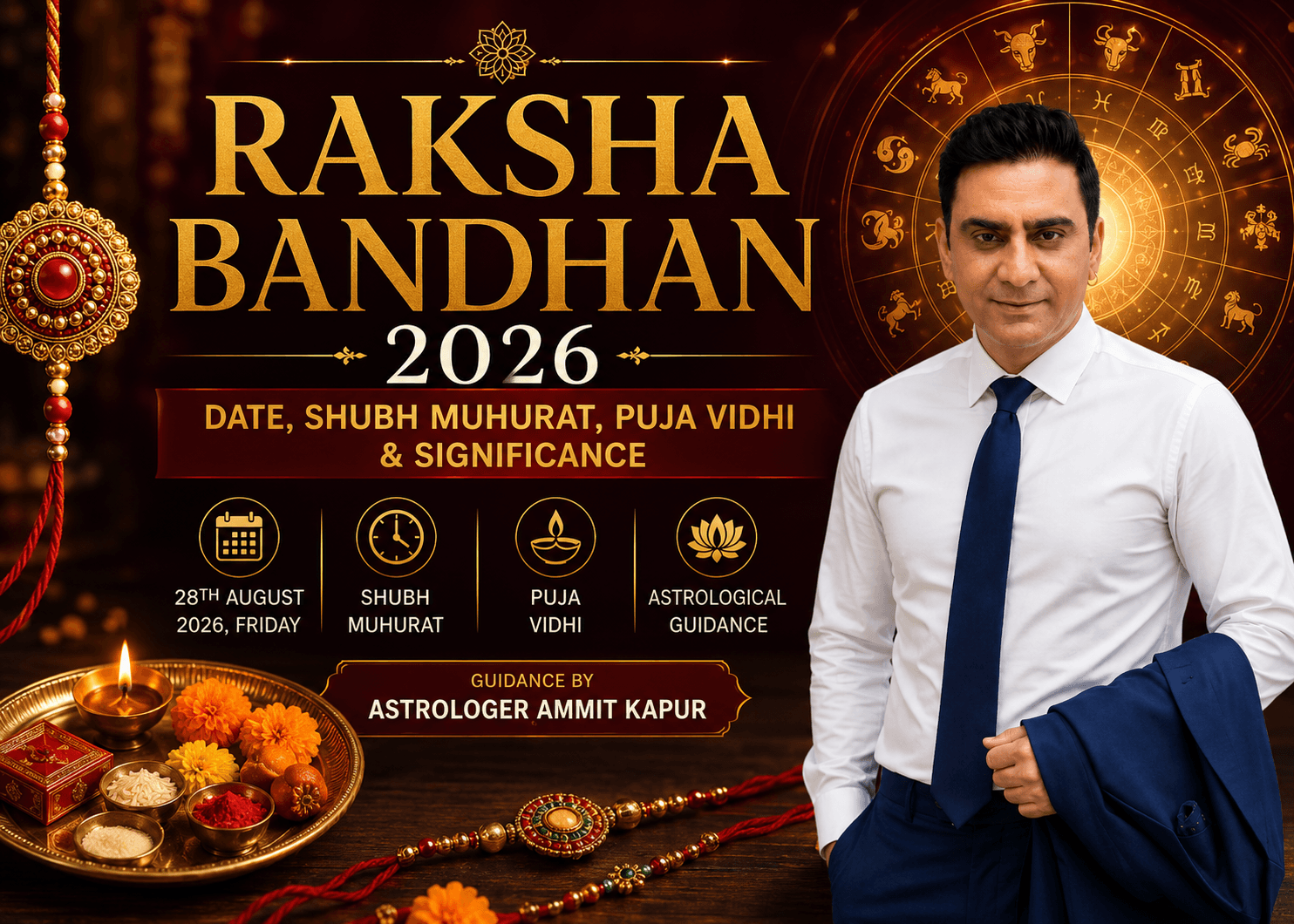

 Table of Contents
 Key takeaways


Leave a Comment